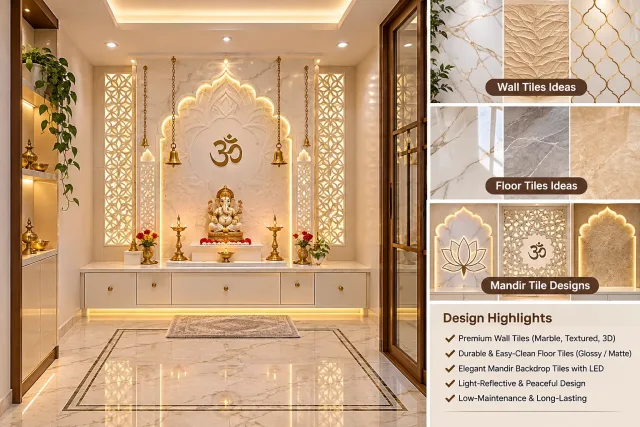
Puja Room Interior Design: Mandir Ideas for Small Flats and Bigger Homes
Puja room and mandir designs for Delhi homes: wall, corner and floor units, jaali doors, stone and wood finishes, lighting, diya safety, storage, common Vastu points and what to ask an interior firm.

A puja room interior design starts with three questions: how much space you have, how your family prays, and how the space will stay clean and safe with daily diyas and incense. In most Delhi flats the answer is not a separate room but a wall unit, a corner mandir or a niche in the living room. This guide covers layouts for small and large homes, materials, lighting, storage and Vastu points many families ask about, with the questions to ask a local interior firm before you order.
Puja room or mandir unit: what fits your home?
A separate puja room needs a spare room or a large alcove, which is common in independent houses and bigger builder floors. Most DDA flats and society flats in Delhi do not have that space, so families choose one of these instead:
- Wall-mounted mandir: a shallow unit fixed on a wall, with a shelf for idols and a drawer below. It takes no floor space and suits small flats.
- Floor-standing mandir: a cabinet with a raised platform, doors and storage below. It can be moved when you shift homes, which helps if you live on rent.
- Corner unit: uses an unused corner of the living or dining room, often with a curved or angled front.
- Built-in niche: a recess made in a wall or in a false wall, finished with stone, tiles or wood. It looks neat but is permanent, so check with the owner if the flat is rented.
- Part of a wardrobe or crockery unit: a section with its own shutter, used when no other wall is free. Keep it separate from clothes and food storage.
Puja room design ideas
1. Simple wall unit with back panel
A plain shelf with a lit back panel in wood, stone or a carved jaali. It keeps the focus on the idols and is easy to dust.
2. Jaali doors
Doors with a cut pattern let you close the mandir while still letting air and light through. They suit a mandir in the living room, where the family may want it closed when guests visit.
3. Stone or marble finish
White marble or a light stone is a traditional choice. It handles heat from diyas better than painted wood and is easy to wipe. Ask what thickness and finish the firm will use.
4. Wooden mandir
Solid wood or plywood with veneer gives a warm look and can carry carvings. Keep a fire-safe base, such as a stone or metal plate, where the diya stands.
5. Glass shelves and back-lit panel
A modern look for a small flat. Use toughened glass and keep the lights cool to touch.
6. Separate puja room with door
In a larger home, a small room with a door, a raised platform, storage on one side and space to sit on the floor. A window or an exhaust fan helps clear smoke from incense.
Materials for a puja room: what to ask
- Base where the diya stands: stone, marble or a metal tray, not bare laminate or painted wood.
- Carcass: plywood or a moisture-resistant board, since the area is wiped often. Ask for the board grade in writing and look for the BIS mark on plywood sheets.
- Finish: laminate, veneer, PU paint, stone or tiles. A matt or textured finish hides fingerprints and oil marks.
- Hardware: soft-close hinges and drawer channels, with the brand named in the quote.
Lighting and ventilation
Most mandirs use a warm LED strip or a few small spotlights behind or above the idols. LED lights stay cooler than old halogen bulbs, which matters in a closed wooden unit. Put the switch outside the unit so you do not reach over a lit diya. Smoke and soot from diyas and incense build up quickly in a closed space, so leave a gap or jaali for air, keep the top of the unit open to the room, or fit a small exhaust in a separate puja room.
Safety with diyas and incense
Keep the flame away from curtains, fabric backdrops and wooden shelves above it. Leave enough clear height above the diya. Do not run electrical wiring right behind the flame. Keep a small metal or stone plate under diyas and incense holders, and put out flames before leaving the room or the home. If children live in the home, choose a design where lamps sit out of their reach.
Chhote ghar mein mandir kahan banwayein?
Chhote flat mein alag puja room ki jagah aksar nahi hoti. Living room ki ek saaf deewar par wall-mounted mandir, ya kisi khaali kone mein corner unit sabse aasaan rehta hai. Mandir ko bathroom ki deewar ke saath ya seedhiyon ke neeche banwane se bahut se parivaar bachte hain. Diya rakhne ki jagah par stone ya metal ki plate rakhwayein, aur light ka switch mandir ke bahar rakhein.
Vastu points families often ask about
Many families in Delhi ask their designer to follow Vastu for the mandir. Common preferences include placing the mandir in the north-east part of the home, having the person praying face east or north, and not placing the mandir under a staircase, next to a toilet wall or in a bedroom. These are traditional beliefs, not building rules, and different consultants advise differently. If Vastu matters to your family, tell the designer at the first meeting, because it can affect where the unit goes and how the wiring is planned. Some interior firms on our directory, such as City Architects in Dwarka and Design Code in Rohini (on request), name Vastu planning in their services.
Storage inside the mandir unit
Plan storage for what you use every day and what you use only on festivals:
- A shallow drawer for matchboxes, cotton wicks, incense and camphor.
- A deeper drawer or shutter for puja thalis, bells, kalash and lamps.
- A separate closed section for festival items, books and spare oil, kept away from the flame.
- A small bell or a hook if your family uses one, placed so it does not knock the idols.
Questions to ask an interior firm before you order
- Will the mandir be made in a workshop or built on site?
- Which board, finish and hardware will you use? Please put the brand and grade in the quote.
- What will the diya base be made of?
- Where will the lights and switch go, and are the lights included?
- Can the unit be removed and moved if we shift homes?
- How long will it take, and what warranty do you give?
- Can you show a mandir you made for another client?
Ask two or three firms for an itemised quote, so you can compare board, finish, hardware and lighting line by line.
Interior firms listed in Delhi
Our directory lists interior design firms in Dwarka, Rohini and other parts of Delhi. A puja unit is usually made by the same firm that makes wardrobes and kitchen units, so check their own list of services and ask whether they build mandirs.
- Interior design firms in Delhi
- Interior designers in Dwarka
- Wardrobe and modular furniture makers
- Almari design ideas
- How to choose an interior designer in Delhi
Frequently asked questions
Which is the best wood for a puja mandir?
Solid wood or good plywood with a veneer both work. What matters more is a fire-safe base under the diya and a finish that is easy to wipe. Ask the firm for the board grade in writing.
Can I place a mandir in the living room?
Yes. Most families in flats do. A wall unit or corner unit with jaali doors lets you close it when you want.
Mandir ki light kaisi honi chahiye?
Garam rang ki LED strip ya chhoti spotlight theek rehti hai. LED kam garam hoti hai. Switch mandir ke bahar rakhein.
How do I keep the mandir free of soot?
Leave space for air to move, keep the top of the unit open or use a jaali, and wipe the back panel often. A stone or metal surface near the flame is easier to clean.
Can a mandir be part of a wardrobe?
It can, in a small flat, if it has its own shutter and is kept separate from clothes. Many families prefer a separate wall unit if space allows.
Published by LocalBusinessDirectory.in. Business details come from our directory listings as of 11 November 2026. Vastu points are described as common beliefs, not advice. We do not inspect or endorse any firm.