
Pooja Room Tiles Design: Wall, Floor and Mandir Tile Ideas
Which tiles to use on the back wall, platform and floor of a pooja room, ceramic vs vitrified vs marble, wall tile design ideas, tiles or wallpaper, grout and what to tell the tiling contractor.
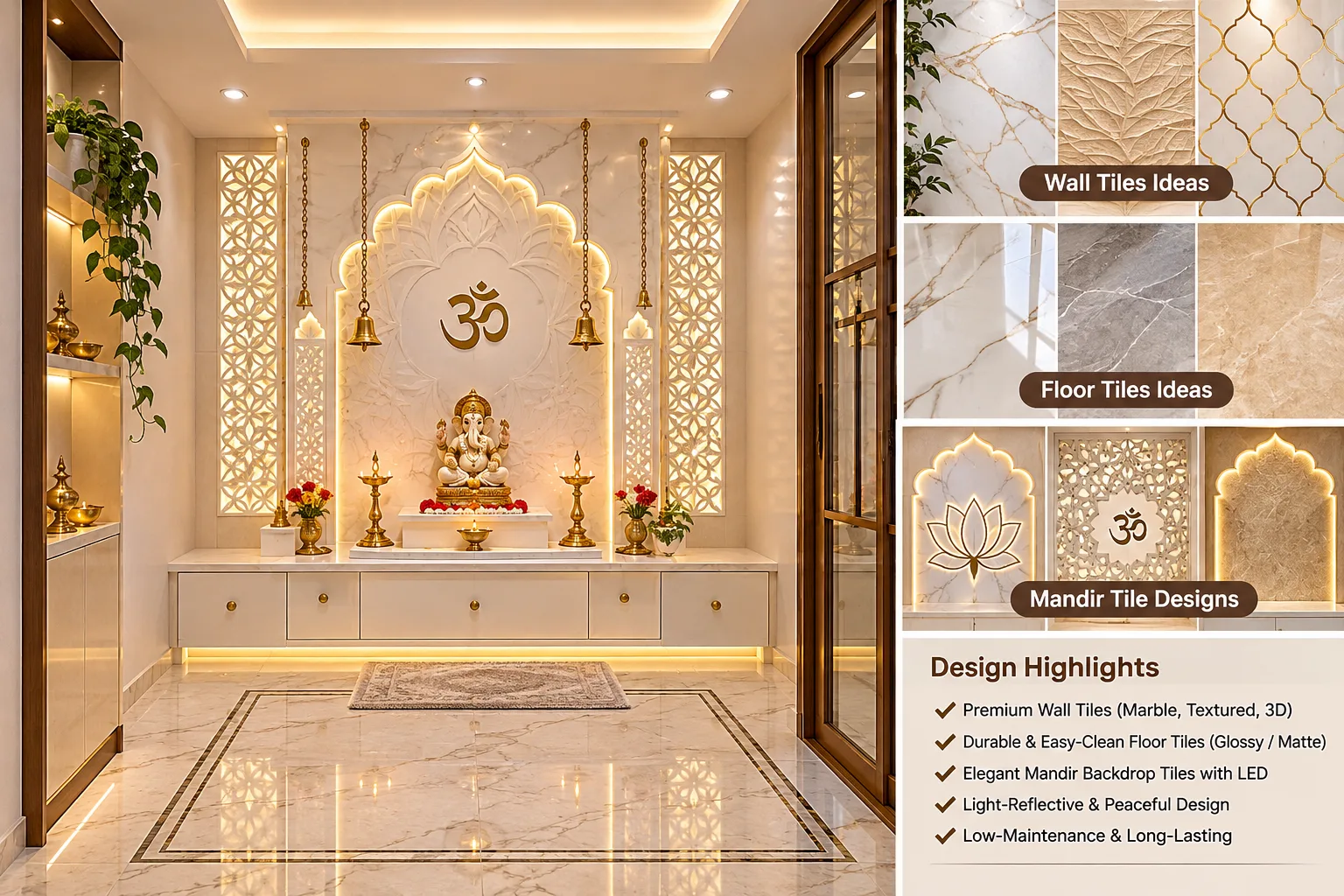
Tiles are the most common way to finish a pooja room or a mandir corner in Indian homes. They are easy to wipe, they do not burn or swell when a diya stands nearby, and they come in every look from plain white marble to gold-line mandala prints. But the wrong tile can turn into a daily cleaning job, or a slippery step in front of the mandir.
This guide covers pooja room tiles design for the back wall, the floor and the platform, which tile type to use where, the main design styles, tiles versus wallpaper, and what to tell the tiling contractor in Delhi. It does not quote prices, because they depend on the tile brand, size and the amount of cutting work. Ask for an itemised quote instead. For layout ideas for small flats and bigger homes, read our puja room interior design guide first.
Where tiles go in a pooja room
A pooja room or mandir unit has three surfaces that take tiles, and each one has a different job:
- Back wall: the surface everyone looks at. This is where a feature tile, a printed panel or a marble-look slab goes. It also catches soot from diyas and incense, so it must be easy to clean.
- Platform or shelf top: where idols, diyas and puja items sit. It takes heat, oil and water every day, so it needs a hard, non-porous surface.
- Floor: in a separate pooja room, people sit or stand barefoot here, often with water or oil from the puja. It needs grip more than shine.
In a small flat with a wall-mounted mandir, only the back wall and the shelf top matter. In an independent house or a bigger builder floor with a separate pooja room, all three do.
Ceramic, vitrified or marble: which tile for which surface
In India, wall and floor tiles are sold under IS 15622:2017, the BIS standard for pressed ceramic tiles. It groups tiles by how much water they absorb. Vitrified and porcelain-grade tiles fall in the lowest group, BIa, with water absorption of 0.5 percent or less. Low absorption means the tile is dense and does not soak up oil from diyas or stains from kumkum and haldi. Check the ISI mark and the group printed on the box.
Ceramic wall tiles
Ordinary glazed ceramic tiles are light, cheap to cut and come in the widest range of prints, including Om, lotus and temple motifs. They are fine for the back wall, where there is no foot traffic. They are not the best choice for the platform, where a dropped brass lamp can chip the glaze.
Vitrified and porcelain tiles
Double-charged or glazed vitrified tiles are harder and absorb almost no water. They suit the platform and the floor, and large slabs in a marble look can cover the whole back wall with very few joints. Fewer joints means fewer lines where soot and dust settle.
Natural marble and stone
White marble is the traditional finish for mandirs across North India. Much of it comes from Makrana in Rajasthan, the quarry town best known for the marble of the Taj Mahal. Marble looks warm and handles the heat of a diya well, but it is softer and more porous than vitrified tile. Oil and turmeric can stain it, so ask the contractor about sealing and avoid acidic cleaners. Granite is harder and resists stains better, and works well as a platform top under a marble or tiled back wall.
Pooja room wall tiles design ideas
These are the main styles families ask for. Most designs combine one feature panel with a plain tile around it, which keeps the look calm and the cost of special tiles low.
1. Marble-look slab behind the idols
One or two large vitrified slabs with a white or ivory marble pattern, set behind the idols with a back-lit panel or a warm LED strip above. It gives the look of a stone mandir without the weight or the staining of real marble.
2. Printed panel with Om, lotus or a deity motif
A set of digital-print tiles that together form one picture, such as a lotus, a mandala, a bell or an Om. Many families prefer a symbol or pattern to a printed image of a deity, because the tile will be wiped, and in some cases chipped or replaced later. Ask to see the full panel laid out at the shop before you buy.
3. Gold-line and mandala tiles
Tiles with thin gold or brass-coloured lines in a geometric or mandala pattern look festive under warm light. Keep them to the back wall and use a plain tile on the sides, or the corner can feel busy in a small flat.
4. Modern pooja room tiles: 3D and textured
Embossed or 3D tiles in a single colour, such as off-white, beige or soft grey, give depth when light falls from above. This modern pooja room tiles design suits a living room mandir where the rest of the room is minimal. Deep textures collect soot, so choose a shallow relief if diyas are lit every day.
5. Mosaic border or jaali-pattern tiles
A narrow mosaic border, or tiles printed with a jaali pattern, frames the back wall and links it to jaali doors or a carved wooden frame. This works well when the mandir has doors and the wall is visible only when they are open.
Pooja room floor tiles design
For a separate pooja room, the floor matters as much as the wall. Points to keep in mind:
- Choose a matt or anti-skid vitrified tile. Polished tiles become slippery when water or oil from the puja falls on them.
- A light colour, such as white, cream or light beige, keeps a small room bright and shows dirt early, which helps keep it clean.
- A raised step or a marble threshold at the door marks the space and stops water from the room running into the rest of the house.
- If the family sits on the floor for long pujas, a warm-toned tile or a wooden-look tile with a removable mat or asan is more comfortable than cold white marble in winter.
Pooja room tiles or wallpaper?
Pooja room wallpaper design has become popular in rented flats, because it is cheaper and comes off without breaking the wall. But wallpaper and an open flame are a poor mix. Paper and vinyl can scorch, and soot leaves marks that cannot be washed off most wallpapers. If you choose wallpaper:
- Use it only above and around the mandir, not directly behind where diyas and incense stand.
- Keep a tiled, stone or metal panel behind the flame.
- Choose a washable vinyl and ask the seller how it handles heat.
For a wall that will see a lit diya every day, tiles or stone are the safer and longer-lasting choice. In a rented flat, a tiled panel on a board, fixed to the wall with a few screws, gives the look of tiles and comes off when you move.
Mandir mein tiles lagwane se pehle kya dekhein
Tile shop par pura design zameen par bichha kar dekhein, sirf ek tile dekh kar na lein. Diya ke peeche wali jagah par aisi tile lagwayein jo aasaani se saaf ho jaye, aur joints ke liye epoxy grout maangein taaki kaala na pade. Chhote flat mein ek hi feature panel aur baaki saadi tile rakhein. Agar ghar kiraye ka hai, to deewar todne ki jagah board par tiles lagwa kar panel banwayein.
Joints, grout and cleaning
The joints between tiles are where a pooja room shows its age first. Soot, oil and haldi settle into cement grout and turn it dark within months. Ask for epoxy grout, which is non-porous and stays close to its original colour. Ask the contractor to keep joints thin and straight, and to use large tiles on the back wall so there are fewer joints in the first place.
For daily care, wipe the back wall and platform with a soft damp cloth after the evening aarti, before soot sets. Use a mild soap solution once a week. Avoid acid cleaners and harsh scrubbers on marble and on printed or gold-line tiles, which can dull the print.
Lighting and the ceiling
Tiles look very different under different light. Glossy tiles reflect a spotlight straight back as glare, while matt and textured tiles look best with light grazing down from above. A warm LED strip hidden under the top shelf or a small false ceiling above the mandir lights the back wall evenly. Keep any light fitting and its wiring well away from the flame, and put the switch outside the unit.
What to tell the tiling contractor
Before work starts, get these points in writing:
- Tile brand, series, size and finish for each surface, with the box label showing the ISI mark and group.
- Who buys the tiles, and how much extra is ordered for cutting and breakage.
- Adhesive type. On an old painted wall, ask how the surface will be prepared so tiles do not come loose.
- Grout type and colour, preferably epoxy behind and around the diya area.
- How the feature panel will be centred on the idols and the shelf.
- Where the light points, switch and any wiring will run.
- Timeline and a payment schedule linked to stages of work.
Interior firms listed on this site can design and build a mandir unit with tiles, stone and lighting. Browse interior design services in Delhi and interior designers in Delhi, or carpenters for the wooden frame and doors around the tiled wall. We list businesses but do not inspect their work, so check each one yourself before paying an advance.
Sources
- IS 15622:2017 Pressed Ceramic Tiles, Specification, Bureau of Indian Standards (water absorption groups, checked 18 Nov 2026 via the InfraLens quick reference): bis.gov.in
- Makrana marble: Wikipedia, Makrana (checked 18 Nov 2026)
Frequently asked questions
Which tile is best for a pooja room wall?
A large vitrified or glazed tile with a matt or satin finish is the most practical. It is easy to wipe, does not absorb oil, and large sizes mean fewer joints where soot settles.
Can I use marble in a small pooja room?
Yes. Marble handles the heat of a diya well and suits a traditional look. It is softer and more porous than vitrified tile, so ask about sealing and avoid acid cleaners.
Which floor tile is best for a pooja room?
A matt or anti-skid vitrified tile in a light colour. Polished tiles get slippery when water or oil from the puja falls on them.
Is wallpaper safe in a pooja room?
Not directly behind a lit diya or incense. Keep a tile, stone or metal panel behind the flame and use washable wallpaper only around it.
How do I stop tile joints in the mandir turning black?
Use epoxy grout, which does not absorb soot and oil, keep joints thin, and wipe the wall after the evening aarti before the soot sets.